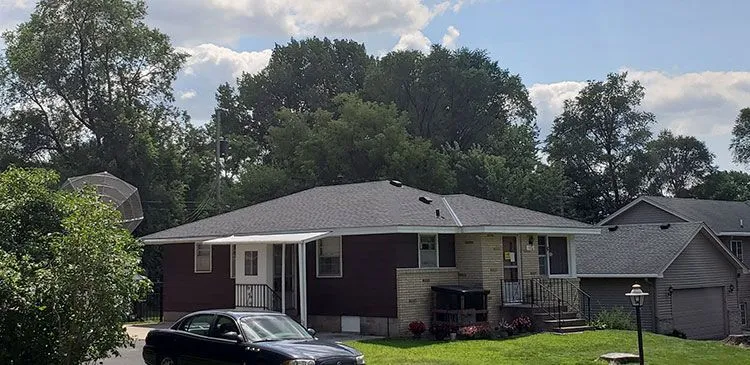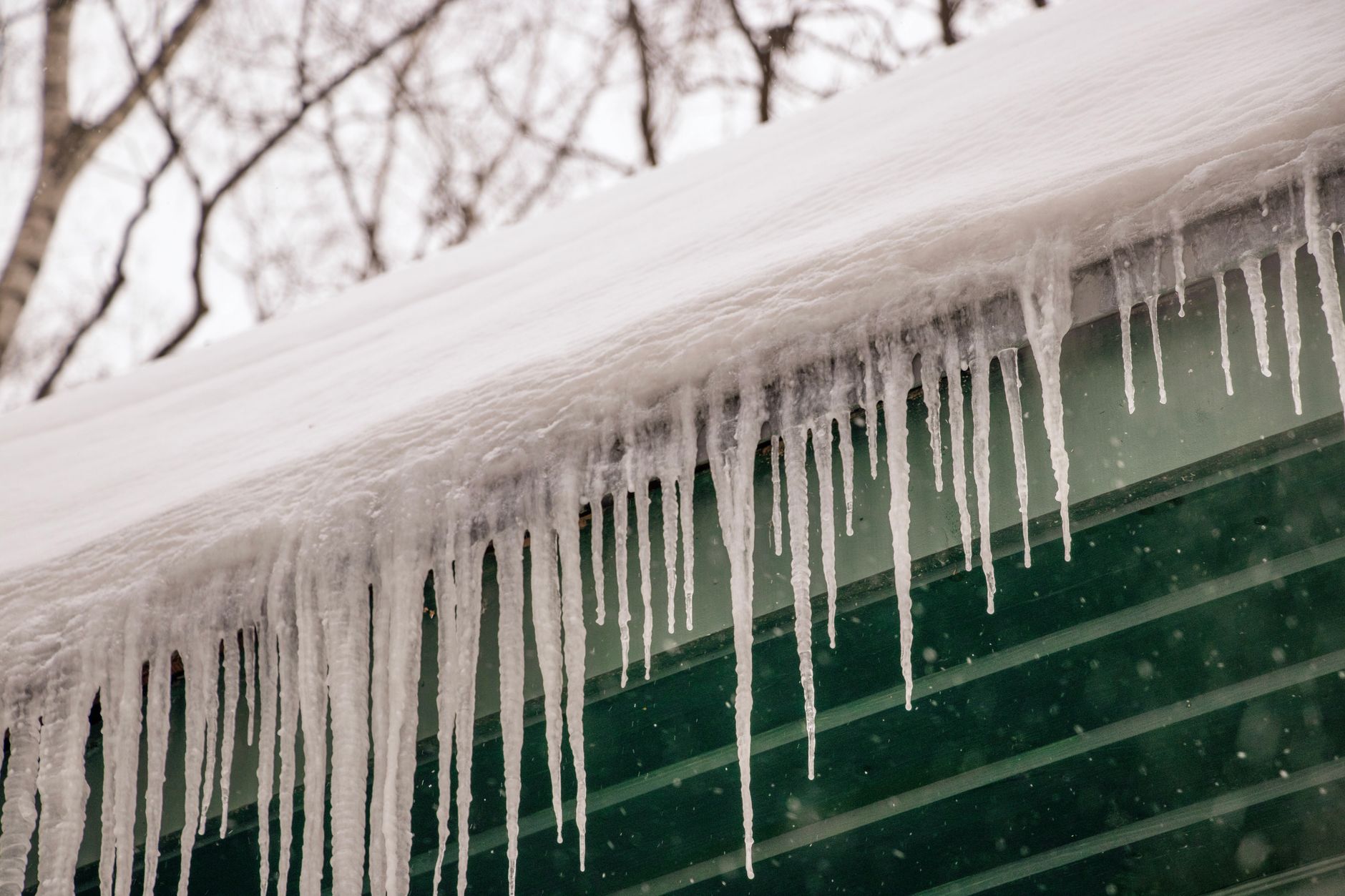
It happens every November. A homeowner in Andover or Isanti has a roof that made it through one more summer, a leak just showed up over the kitchen, and the question is simple: can you still put a new roof on before spring? The honest answer is yes, a lot of the time. Cold weather changes how shingles behave, though, and it changes how we run the job. Here is what actually changes when a roof goes on in a Minnesota winter, and how to decide whether yours should wait.
Why cold weather matters to asphalt shingles
Architectural asphalt shingles hold down in wind because of a strip of sealant on each course. That strip softens in the sun and bonds to the shingle above it. In July it happens within days. In December it might not happen until the first warm stretch of spring.
The Asphalt Roofing Manufacturers Association puts it plainly: "Sealing time will vary depending on the slope of the roof, its orientation, and the amount of sun/heat exposure." A north-facing slope in January gets almost none of that.
Flexibility is the second issue. ARMA notes that "asphalt shingles tend to become less flexible as temperature decreases," and it warns against bending, throwing or dropping cold bundles. A shingle that cracks when you bend it over a ridge or into a valley is a shingle that leaks later. Cold shingles also need careful nailing, because a shingle that isn't lying flat can let the nail head blow through the surface.
What a cold-weather roof job should look like
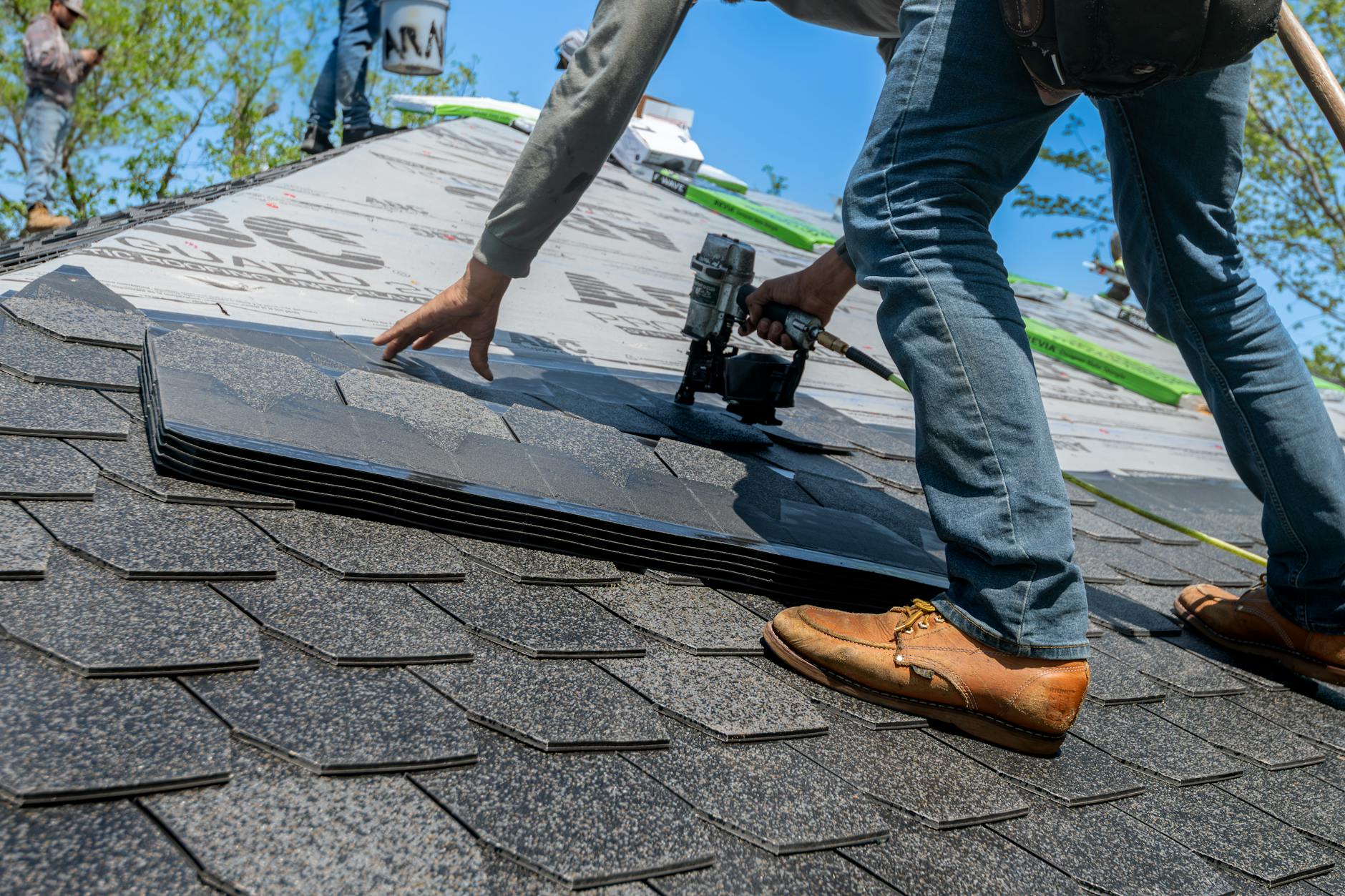
None of this means a winter roof is a bad roof. It means the crew has to work around the temperature instead of ignoring it. A cold-weather tear-off done right should:
- Keep shingle bundles stored warm until they go up, as ARMA recommends ("store shingles indoors to keep them warm prior to application").
- Hand seal shingles with a manufacturer-approved roofing cement where the cold-weather instructions call for it, so the roof holds in wind before the factory strip ever activates.
- Start tear-off once the frost is off and remove only what can be dried in and covered the same day.
- Clear snow and frost from the deck before ice-and-water shield goes down. Self-adhered membrane needs a clean, dry surface to stick.
- Use the specific manufacturer's cold-weather application instructions for the shingle line on your house, since GAF, Owens Corning and CertainTeed each publish their own.
The daylight is the other constraint. A crew that has ten working hours in June has maybe seven in late December, and the first one is spent waiting for the frost to burn off. The scope of a roof replacement stays the same in winter (tear-off down to the deck, sheathing repair, ice-and-water barrier, synthetic underlayment, new flashing, ventilation, magnet sweep for nails). The schedule is what bends around the forecast.
When a winter replacement makes sense
Some roofs should not wait for April. A winter replacement is worth it when:
- It is actively leaking in more than one spot and patches aren't holding.
- Storm damage has left shingles missing or the deck exposed.
- The house is going on the market and buyers or lenders need the roof done.
- Decking is soft enough that walking on it is a concern, which usually means water has been getting in for a while.
On the other side, if your roof is old but dry, and the only reason you're asking is that you finally got the estimate, waiting for warmer weather is usually the better call. The shingles seal faster, the crew moves faster, and you aren't paying for a job that has to stop every time it snows. If you are trying to figure out how much life your current roof has left, our post on how long a roof lasts in Minnesota walks through it.
Hail claims are their own category. If a summer or fall storm hit and the insurance approval landed late in the season, talk through the timing with us before you assume it has to happen this year. Many policies give you a window to complete the work, and a roof installed in May tends to seal down better than one installed during a cold snap in December. Ask your insurer what deadline applies to your claim.
Getting through to spring with a repair
If the full replacement can wait but the leak can't, a targeted repair is the bridge. That might be replacing a few blown-off shingles, resealing a pipe boot, or re-flashing around a chimney. Repairs in winter run into the same sealing problem, so new shingles on a winter repair should be hand sealed too. A proper roof repair can stop the leak so the full job gets scheduled for a better month.
A tarp is a short-term fix only. It buys time after a storm, but snow load, wind and freeze-thaw tear tarps loose fast. If you have one on now, plan on a real repair soon.
How long a winter roof replacement takes
In good weather, a typical home in the north metro can often be torn off and reshingled in a single day when the crew is sized for the job.
"Cedar Creek Construction did an excellent job on our roof! The entire project was completed in just one day, and the results are outstanding. Our house looks brand new again, thank you, Chuck, for the great work!"
Keith O., 5-star Google review, September 2025
In winter, plan on more time. Shorter days, frost delays and snow on the forecast can turn a one-day job into two or three. Splitting a roof across two days and drying it in properly each night beats rushing a slope at four in the afternoon in the dark.
Frequently asked questions
Can a roof be replaced in winter in Minnesota?
Yes. Asphalt shingle roofs can be replaced in a Minnesota winter as long as the crew follows the manufacturer's cold-weather instructions, keeps shingles warm, hand seals where required and only tears off what can be dried in the same day. Very cold, windy or snowy days still stop work.
Will new shingles seal if they are installed in the cold?
The factory sealant strip needs heat from the sun to bond, so shingles installed in cold weather may not seal until temperatures warm up. Hand sealing with an approved roofing cement holds them down in the meantime.
How long does a winter roof replacement take?
A job that takes one day in summer can take two or three days in winter because of shorter daylight, frost on the deck and weather delays. The roof should be dried in and protected at the end of each work day.
Should I wait until spring to replace my roof?
If your roof is old but not leaking, spring is usually the better time because shingles seal faster and work goes quicker. If it is leaking in several places, missing shingles after a storm or has soft decking, replacing it in winter or doing a repair now is safer than waiting.
Who replaces roofs in St. Francis and the north metro?
Cedar Creek Construction is based in St. Francis and handles roof replacement and repair across the north metro, including Andover, Anoka, Blaine, Coon Rapids, Cambridge and Isanti. Estimates are free, and the timing of a winter job can be worked out at the estimate.